

One of the things we always tell our clients is never to put all your eggs in one basket. SEO is not guaranteed! And things evolve! Google rankings are not stable, you are dealing with a live index that can fluctuate every 5 minutes.
In fact, we are slowly starting to re-educate clients that Google rankings are just a means to an end and that website traffic and conversion should be the key metric to follow. Being in the top 3 of Google does not pay the bills, visitors to the website do!
However, there will be times when things dip and a sudden drop in traffic can happen. This can be frustrating and worrying. Especially when the phone stops ringing or your contact us form goes quiet.
So where do you start when you are facing a drop in conversion, traffic, or rankings? Here we highlight the ways to figure out what went wrong and act.
Analyse What It Could Be
There can be a sudden rush to act and fix things! But what to fix? Here I recommend stepping away from the website, take a breather and try and figure out exactly what may have caused the drop in traffic. Figure out the reason and you will be in a much better position to take positive action, than trying a whole range of things and wasting time and money, with no results.
So, what issues can cause a loss of web traffic? Here I highlight a few:-
Changes & Website Issues
One of the first things to check if your website traffic has suddenly started to decline is the pages. Is this a site-wide slump or just individual pages? Once you have answered this question, I would then look into whether anything has changed on the website itself. Have any changes been made to the content, menus, or an additional pop-up? Does your website or plugins need upgrading? Finding out when any changes were made and then looking at the dates you noticed declines, can leave clues as to what may have caused the issue.
Solution
Use traffic analytics software such as Google Analytics and your Google rankings to plot whether it is pages or the whole site that has suffered. You can also find out the exact date, to see whether any changes had been made to the website during this time.
Make sure any CMS or plugins are always kept up to date and monitor Google Search Console (see below) and run crawling software monthly on your website such as Screaming Frog SEO Spider or Ubersuggest to pick up any issues.
Algorithmic
in 2019 alone Google made a staggering 3,200 algorithmic changes to its index. Most of the time these are only small changes, that only have a minimal effect or focus on the way Google looks, rather than rankings. However, from time to time they do roll out changes that can affect how websites are ranked. If you are lucky, there will be lots of SEO chatter about it (if Google announced it) or you may find you have to wait a month before fluctuations in Google rankings are reported publicly.
Solution
Algorithm updates can be a bit vague sometimes as to what has changed. I would wait for 30 days to see if it is something specific. In the meantime, is there any information you can gain from website visits? Are there any pages that have particularly dropped or is it a site-wide drop? Any keywords? This can help you diagnose where to start.
Unfortunately, for updates like the core update, Google says there is not really anything you can fix, they just chose someone else as a better fit, but even that answer can give you clues. I would recommend looking at the content on your site and comparing it to competitors on the first page. Has Google changed what they expect in terms of the results a keyword should produce? i.e I have seen instances where a keyword such as “resin drives”, moves to a more informational keyword and google expects longer content in the form of an article highlighting features/benefits and solving problems, rather than a transactional page like a product or service page.
If it is an update that looks at certain types of links (although we have not had one of these for a while), it may be a good idea to use a tool like Ahrefs or Majestic to look at your backlink profile and see if you need to be building better links.
One way to be more reactive with algorithmic changes is to pay attention to the sites and people we recommend below. For instance, in the month of May sees the launch of the Google Page Experience update. Which could affect up to 10% of sites. Implementing any necessary changes before the update comes about, can help you weather the storm.
I subscribe to a number of blogs and follow a key number of SEO people to keep me informed. These guys put in a huge amount of work to monitoring changes and can be a great place to start if you notice anything out of the ordinary (say a consistent drop of 20% in traffic over a month).
Key Places To Check & People To Follow Are:-
Websites
Mozcast – Monitors changes in rankings and presents the data as a weather report.
SEMRush Sensor – Monitors changes per industry.
Lilly Ray – Excellent SEO commenter. Posts upto date studies and analysis of updates.
Glenn Gabe – If you want to know anything about Google’s core update, Glenn is the man to follow. He posts in depth analysis into each update, with key points to follow.
Marie Haynes – Marie has become the go to lady for anything update and recovery related. Again, just like Glenn she posts key in depth analysis into updates and looks for similar trends to help with recovery.
Server Issues
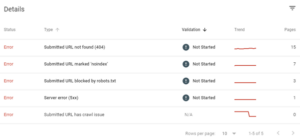
Whilst algorithmic changes can be a bit like chasing a needle in a haystack, server issues are something concrete to get a grip on. This is where you can use a FREE tool straight from Google called Google Search Console. Sign up via a Gmail address, verify your domain and you get a wide range of useful information.
For instance, clicking on the Coverage button and you get the following information:
Solution
Look through any issues you find here, and it may give you clues as to why traffic has dropped if you can link it to specific pages.
If you notice an increase in 500 server errors, this means the server did not respond to a request from Googlebot, which means you may have issues with your website hosting or platform.
Poor response times can heavily affect your trust in Google. This may indicate it is time to upgrade your web hosting package or change the platform the website is built on.
Summary
Regardless of the issue, the key to dominating Google’s search engine result pages is to pay attention to what Google is after from a search term. Regularly checking the top ten listings, can give you vital clues as to content length, the keyword you need to be mentioning, and the type of content Google is looking to serve up.
Concentrate on providing useful content that serves a purpose and you will reap the rewards over time.


